

Miracle in Marin: Bystander CPR Helps Save a Cyclist
Updated September 2026 with current CPR and AED guidance.
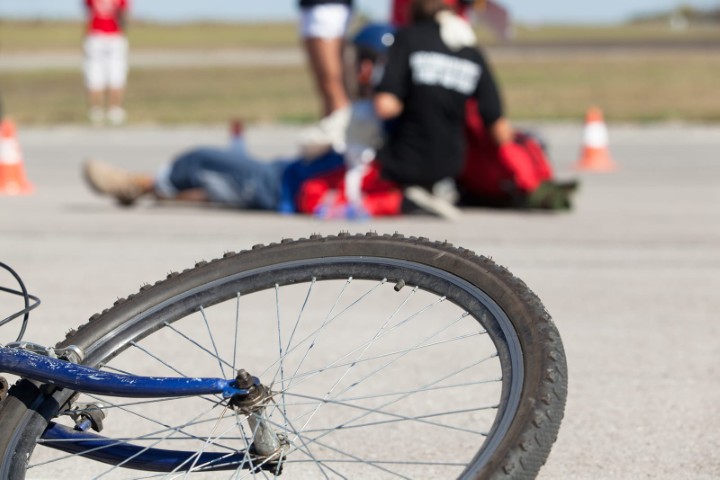
The emergency call to Marin County, California, sounded routine:
“Bicyclist down.”
Firefighters and paramedics respond to plenty of calls involving cyclists, many of them relatively minor.
This one was different.
When emergency responders arrived, they found a cyclist in cardiac arrest and a nearby person already performing bystander CPR.
That quick action helped keep the cyclist alive until EMS could take over.
Bystander CPR Started Before EMS Arrived
According to the original account, the cyclist collapsed while riding.
A nearby person recognized that something was seriously wrong and began CPR before firefighters and paramedics reached the scene.
EMS continued the resuscitation effort, restored an effective heartbeat, and transported the cyclist to the hospital.
He recovered and was later discharged.
The responders credited the early CPR with giving him a much better chance of survival.
That lesson still holds today.
Cardiac Arrest Is Not the Same as a Heart Attack
The original article described the cyclist as having a heart attack.
A heart attack and cardiac arrest are different emergencies.
A heart attack happens when blood flow to part of the heart muscle becomes blocked.
Cardiac arrest happens when the heart suddenly stops pumping blood effectively.
A heart attack can sometimes trigger cardiac arrest, but once a person is unresponsive and not breathing normally or is only gasping, the immediate emergency is cardiac arrest.
Current American Heart Association guidance says a lay rescuer should assume cardiac arrest in that situation and act immediately.
Why Bystander CPR Matters
Cardiac arrest can happen almost anywhere.
It can happen:
- At home
- At work
- On a bike trail
- At the gym
- In a store
- At a sporting event
- While traveling
The person who helps may not be a doctor, nurse, or paramedic.
It may simply be the person standing closest who recognizes the emergency and knows what to do.
The American Heart Association says immediate CPR can double or triple the chance of survival from out-of-hospital cardiac arrest. Bystander CPR matters.
What Should a Lay Rescuer Do?
For an adult who suddenly collapses and is unresponsive with no normal breathing, the priorities are simple:
Call 911. Start CPR. Get an AED.
Current AHA guidance emphasizes rapid activation of emergency response, immediate chest compressions, and early AED use.
An untrained rescuer can perform Hands-Only CPR by pushing hard and fast in the center of the chest.
A trained rescuer may provide breaths along with chest compressions. The 2025 AHA guidelines specifically note that it is reasonable for trained lay rescuers to provide breaths in addition to compressions during adult cardiac arrest.
Hands-Only CPR Has an Important Role
Hands-Only CPR has made it easier for people to act quickly when an adult or teen suddenly collapses.
It removes one common barrier: uncertainty about giving breaths.
But Hands-Only CPR does not replace CPR with breaths in every situation.
Breaths are particularly important when cardiac arrest results from a breathing problem, including situations such as drowning, opioid-related emergencies, or many pediatric cardiac arrests.
The 2025 AHA guidelines also emphasize the importance of compressions and breaths, especially for infants and children.
An AED Can Be the Next Critical Step
CPR helps keep blood moving.
An automated external defibrillator, or AED, may be able to correct certain dangerous heart rhythms that cause cardiac arrest.
When an AED arrives:
- Turn it on
- Attach the pads
- Follow the voice or visual prompts
- Make sure nobody is touching the person during rhythm analysis or shock delivery
- Resume CPR immediately when instructed
The AED determines whether a shock is appropriate.
You do not have to diagnose the heart rhythm yourself.
The AHA recommends using an AED as soon as one is available during suspected cardiac arrest.
One Person Can Change the Outcome
The Marin cyclist survived because someone nearby recognized the emergency and acted before professional rescuers arrived.
That is the real lesson from this story.
Bystander CPR can bridge the gap between collapse and the arrival of EMS.
Those first few minutes matter.
The person who stops, calls 911, begins CPR, and gets an AED may become the first link in a much larger Chain of Survival.
Learn CPR Before You Need It
In-Pulse CPR provides hands-on American Heart Association CPR, BLS, AED, and First Aid training for individuals, healthcare professionals, and workplaces.
👉View Upcoming CPR Classes
Businesses and organizations can also schedule private on-site CPR and AED training.
📍 Find local CPR certification classes near you in MN, PA, FL, and TN!
👉Learn About On-Site CPR Training
You may never expect to encounter a cyclist, coworker, family member, or stranger in cardiac arrest.
Neither did the person who stopped to help in Marin.
Knowing CPR gives you a better chance of knowing what to do when those few minutes matter most.
Updated September 2026: This article has been revised to clarify the difference between heart attack and cardiac arrest and to reflect current American Heart Association guidance on bystander CPR, Hands-Only CPR, breaths, and AED use.
