

Firefighters Use CPR to Save St. Petersburg Man After House Fire
Written by Benjamin Roussey
Updated October 2026 with additional details from the documented rescue and current CPR guidance.
On the morning of November 25, 2011, an 89-year-old St. Petersburg man became trapped inside his burning home.
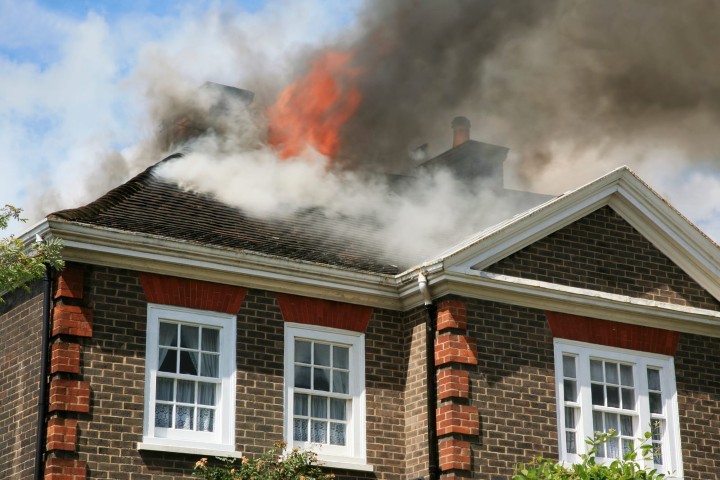
Heavy fire had spread through the house.
Smoke filled the rooms.
Conditions were deteriorating rapidly.
Inside was Charles “Luke” Davis.
Two St. Petersburg firefighters entered the burning home, found Davis just as he stopped breathing, and carried him outside where emergency medical treatment began.
The rescue was later significant enough that both firefighters were nominated for a national Courage and Valor award. Fire Engineering
A House Fire on 22nd Avenue South
The fire broke out at Davis’ home at 2721 22nd Avenue South in St. Petersburg, Florida.
St. Petersburg Fire & Rescue crews were already clearing another nearby call when dispatch reported the structure fire at 8:09 a.m.
As District Chief M. Zamparelli approached, he could see a large column of smoke.
Bystanders told arriving firefighters that an elderly man was still trapped inside.
By then, much of the one-story home and attic were heavily involved in fire, with thick, turbulent smoke pouring from the structure. Fire Engineering
Firefighters Entered the Burning Home
Firefighter/EMTs Christopher Spafford and Bradley Williams immediately began searching for Davis.
Because every second mattered, they entered through the rear of the home before a hose line was available.
Visibility was extremely poor.
The heat was intense.
The firefighters pushed farther into the home looking for Davis.
In the kitchen area, they finally found him.
According to the later Fire Engineering account, Davis gave one final cough and then stopped breathing. Fire Engineering
Davis Was in Respiratory Arrest
Spafford and Williams carried Davis through the rear of the house and into the backyard.
Other responders immediately began medical treatment.
Fire Engineering documented that Davis was in respiratory arrest and was transported to the hospital in critical condition. Fire Engineering
The original account of the rescue reported that firefighters used CPR as part of the effort to revive him.
Davis was initially taken to Bayfront Medical Center in St. Petersburg and was later transferred to Tampa General Hospital for treatment of his injuries.
Respiratory Arrest and Cardiac Arrest Are Different
This older article gives us a good opportunity to clarify an important difference.
Respiratory arrest means a person has stopped breathing.
Cardiac arrest means the heart has stopped pumping blood effectively.
A person in respiratory arrest may still have a pulse, but without oxygen, cardiac arrest can quickly follow.
For trained healthcare providers, rescue breathing may be appropriate when a pulse is present but normal breathing has stopped.
For a lay rescuer, current American Heart Association guidance is simpler: if an adult is unresponsive and not breathing normally or is only gasping, assume cardiac arrest, call 911, and begin CPR. Fire Engineering
Smoke Inhalation Can Become Life-Threatening Quickly
People sometimes associate house fires mainly with burns.
Smoke can be just as dangerous.
Smoke inhalation can interfere with breathing and oxygen delivery, and inhaled heat or toxic gases may injure the airway and lungs.
Warning signs after smoke exposure can include:
- Difficulty breathing
- Persistent coughing
- Hoarseness
- Confusion
- Soot around the mouth or nose
- Burns to the face or airway
- Loss of consciousness
Anyone with significant smoke exposure or breathing difficulty needs emergency medical evaluation.
Do Not Enter a Burning Building to Attempt a Rescue
There is another critical lesson from this story.
Neighbors reportedly tried to reach Davis before firefighters arrived, but the fire was too intense.
One neighbor was burned during the attempt.
That underscores an important safety rule:
Do not enter a burning structure to rescue someone unless you are a properly equipped and trained firefighter.
Call 911.
Tell dispatchers that someone may still be inside.
Give firefighters as much information as possible about the person’s likely location.
Professional firefighters have protective clothing, breathing equipment, training, hose lines, and teams designed for exactly this kind of rescue.
The Firefighters Were Later Recognized
Spafford and Williams’ actions did not go unnoticed.
In 2012, Fire Engineering named both St. Petersburg firefighters as nominees for the Ray Downey Courage and Valor Award.
The nomination described how they entered the heavily involved structure under extreme smoke and heat conditions, located Davis, and removed him just after he stopped breathing. Fire Engineering
It is powerful independent documentation of the rescue described in this original In-Pulse CPR article.
“Luke Lightning” Had Survived Before
Davis was a retired city worker who lived alone and was well known by his neighbors.
According to the original account, many of them called him Mr. Luke.
His friend Dana Sims said Davis had earned another memorable nickname much earlier in life:
“Luke Lightning.”
The story was that Davis had been struck by lightning at age 13 while growing up in Mulberry, Florida, survived, and carried the nickname afterward.
More than seven decades later, he found himself surviving another extraordinary emergency.
CPR and First Aid Training Matter in Florida Communities
Most people will never enter a burning building, nor should they.
But emergencies involving respiratory arrest, cardiac arrest, severe burns, choking, and other breathing problems can happen anywhere.
They can happen at home in St. Petersburg, at work in Tampa, in a restaurant in Brandon, or at a business in Wesley Chapel, Clearwater, Largo, or Lakeland.
Knowing CPR and First Aid can help you recognize when an emergency is life-threatening and understand what to do while professional help is coming.
Learn CPR Before Someone Needs It
In-Pulse CPR provides hands-on American Heart Association CPR, BLS, AED, and First Aid training throughout the Tampa Bay area and other Florida communities.
👉 View Upcoming Florida CPR and First Aid Classes
Businesses, schools, churches, healthcare organizations, and other groups can also schedule training at their location.
👉 Learn About Private On-Site CPR and First Aid Training
Charles Davis needed trained rescuers on one of the worst mornings imaginable.
Spafford and Williams were there.
They went in when nobody else safely could and brought him back out.
Updated October 2026: This article was originally written by Benjamin Roussey and has been substantially revised using independent documentation from Fire Engineering. The November 25, 2011 rescue of Charles Davis by St. Petersburg Fire & Rescue firefighters Christopher Spafford and Bradley Williams was later cited in their nomination for the 2012 Ray Downey Courage and Valor Award.
***
