

Crossing the Real Finish Line: Bystander CPR Saves a Runner
Written by Tom Sirmons
Updated October 2026 with current CPR and AED guidance.
A half-marathon is supposed to end with a finish line, a medal, and a deep breath.
For one 40-year-old runner in San Jose, California, the real finish line became something else entirely.
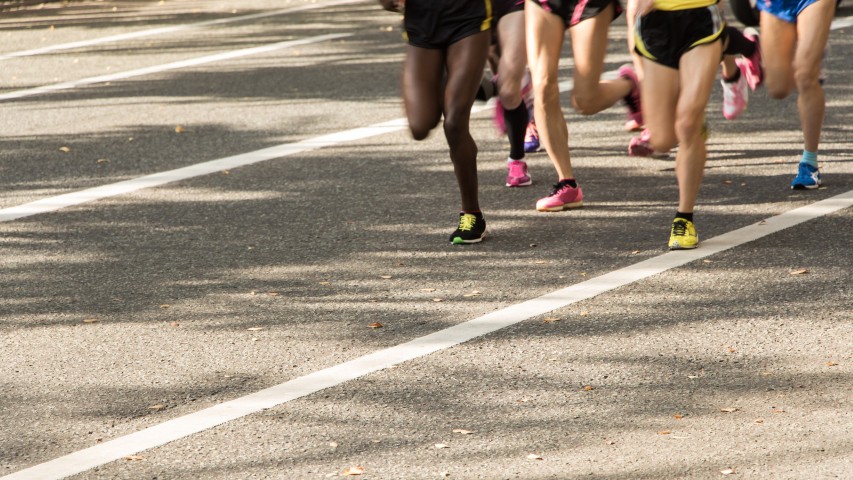
According to the original account, he was only about a tenth of a mile from completing a half-marathon when he suddenly collapsed.
A nearby nurse from Stanford University Hospital recognized that he was unresponsive and not breathing normally.
She immediately began CPR.
That fast response may have made all the difference.
Bystander CPR Began Within Moments
The nurse reportedly found that the runner had no signs of circulation and began chest compressions right away.
Emergency medical technicians were already stationed nearby for the race and quickly took over.
According to the original story, the runner had regained breathing and consciousness by the time he was placed into the ambulance for transport to a hospital.
I was able to confirm the original In-Pulse account, but I could not locate independent contemporary reporting that verifies all details of this particular rescue. Because of that, it is best preserved as a survival story based on the original account, without adding unsupported specifics. In-Pulse CPR
Why Bystander CPR Matters
The most important lesson is still current:
CPR needs to begin quickly.
The 2025 American Heart Association Adult Basic Life Support guidelines continue to emphasize rapid recognition of cardiac arrest, immediate high-quality CPR, and early AED use. cpr.heart.org
For a lay rescuer, if an adult is:
- Unresponsive
- Not breathing normally
- Or only gasping
the person should be assumed to be in cardiac arrest.
The priorities are:
Call 911. Start CPR. Get an AED.
The Rescuer Happened to Be a Nurse
It is easy to look at a story like this and think the runner survived only because a nurse happened to be nearby.
Her medical background certainly helped her recognize the emergency quickly.
But the first steps she took are skills ordinary people can learn too.
CPR training teaches you how to:
- Recognize possible cardiac arrest
- Activate 911
- Begin chest compressions
- Use an AED
- Continue CPR until EMS takes over
You do not need to be a nurse, physician, or paramedic to begin helping.
Hands-Only CPR Has an Important Role
The original article said that CPR had changed so much that rescue breaths were no longer emphasized.
That was too broad.
For an adult who suddenly collapses, Hands-Only CPR is appropriate for an untrained or unwilling lay rescuer:
Call 911 and push hard and fast in the center of the chest.
For trained rescuers, conventional CPR with compressions and breaths remains appropriate.
Current AHA guidance recommends chest compressions at a rate of 100 to 120 per minute and a depth of at least 2 inches for an average adult, while allowing complete chest recoil. cpr.heart.org
The AED Is the Next Critical Step
CPR helps keep blood moving.
An AED may be able to correct certain dangerous heart rhythms that cause cardiac arrest.
That is why modern CPR training puts so much emphasis on getting an AED as soon as possible.
At organized races, having trained medical staff and AEDs positioned along the course can make a major difference when someone collapses.
Cardiac Arrest Can Happen During Exercise
Exercise is generally good for the heart.
But sudden cardiac arrest can still occur during athletic events.
A person may appear healthy, be actively exercising, and still experience a life-threatening rhythm problem.
That is why race organizers, gyms, schools, athletic facilities, and community events benefit from having:
- Trained staff
- Clear emergency plans
- Accessible AEDs
- People willing to start CPR immediately
CPR Training Builds Confidence
The nurse in this story acted because she knew what to do.
That is one of the biggest benefits of training.
The emergency is still stressful.
But instead of staring at the situation and wondering where to begin, you have a framework:
Recognize.
Call.
Compress.
Defibrillate.
Continue until help arrives.
Learn CPR Before the Emergency Happens
In-Pulse CPR provides hands-on American Heart Association CPR, BLS, AED, and First Aid training.
👉 View Upcoming CPR Classes
Businesses, gyms, schools, churches, athletic organizations, and other groups can also schedule private training.
👉 Learn About Private On-Site CPR and AED Training
You may never expect someone to collapse a tenth of a mile from the finish line.
That is exactly why CPR training happens before race day.
Updated October 2026: This article was originally written by Tom Sirmons and has been substantially revised to reflect current American Heart Association CPR and AED guidance. The runner rescue is based on the original In-Pulse CPR account; independent contemporary reporting confirming all details could not be located.
***

COMMENT (2)
Carol / December 28, 2011
I used to have a great fear that I might have to perform CPR on someone, because I took a class years ago. After being in a recent class with In-Pulse CPR, I know now that I can perform it effectively and with confidence. I no longer fear that I might need to do it, but with confidence an say that I will NOT be a bystander, I WILL step in. Maybe I can be part of saving a life.
Golu / June 1, 2012
The nurses we still keep in contact with from our Hospital days often say the same thing…how thankful they are for their families and how the don’t take them for granted. Same is true for us who have lived in the ICU, you never take things for granted again. My baby just had her “rebirthday” yesterday. The thought of how fragile life is has been weighing on me very heavily these last few days!