

Know the Signs of a Heart Attack and What to Do (2026 Update)
Updated October 2026 with current American Heart Association and First Aid guidance.
If you or someone near you may be having a heart attack, you may have only minutes to act.
Some heart attacks are sudden and intense. Others begin more slowly with mild pain, pressure, shortness of breath, nausea, fatigue, or other symptoms that are easy to dismiss.
The safest response is simple:
Recognize the warning signs and call 911.
Common Heart Attack Warning Signs
The American Heart Association lists several common signs of a heart attack. Symptoms can vary from person to person and may come and go. www.heart.org
Seek emergency medical help if someone experiences:
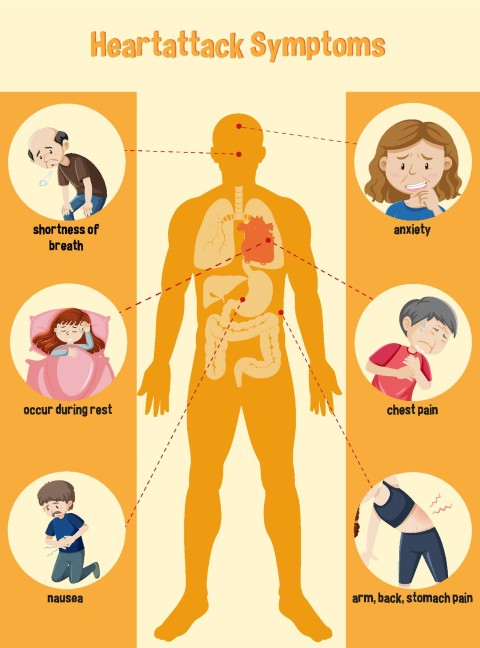
- Chest discomfort such as pressure, squeezing, fullness, or pain
- Pain or discomfort in the arms, back, neck, jaw, or stomach
- Shortness of breath, with or without chest discomfort
- Cold sweating
- Nausea
- Lightheadedness
- Unusual fatigue
- Rapid or irregular heartbeat
Symptoms do not have to be severe to be important.
A heart attack can begin with discomfort that feels mild and then becomes worse.
Heart Attacks Do Not Always Look the Same
Many people expect a heart attack to look like someone suddenly grabbing their chest and collapsing.
That can happen.
But heart attacks may also present with less dramatic symptoms.
Some people experience:
- Unusual tiredness
- Shortness of breath
- Indigestion-like discomfort
- Back or jaw discomfort
- Nausea
- Mild chest pressure
The AHA also recognizes silent heart attacks, which may cause mild or unusual symptoms or may not be recognized until later testing. www.heart.org
If something feels seriously wrong, do not wait for the symptoms to become dramatic.
What Causes a Heart Attack?
Most heart attacks happen when blood flow through a coronary artery becomes blocked.
Atherosclerosis causes fatty deposits, or plaque, to build up inside the artery wall.
If a plaque ruptures, a blood clot can form and block blood flow to part of the heart muscle.
Without adequate oxygen-rich blood, heart tissue begins to suffer damage.
That is why rapid treatment matters.
What Should You Do If You Suspect a Heart Attack?
Call 911 immediately.
Do not wait to see whether symptoms improve.
Do not drive yourself to the hospital if EMS is available.
The American Heart Association recommends calling 911 because emergency medical personnel can begin treatment before arrival at the hospital and coordinate care while en route. www.heart.org
While waiting:
- Have the person rest in a comfortable position
- Keep them calm
- Stay with them
- Monitor their responsiveness and breathing
- Follow the 911 dispatcher’s instructions
What About Aspirin?
Aspirin may be appropriate for some alert adults with nontraumatic chest pain while waiting for EMS.
Current American Heart Association and American Red Cross First Aid guidance says an alert adult may be encouraged to chew and swallow 162 to 325 mg of aspirin if the person has no known aspirin allergy and has not been told by a healthcare professional to avoid aspirin. professional.heart.org
However:
Call 911 first.
Do not take aspirin and then wait to see whether the pain goes away.
The AHA also notes that a 911 dispatcher may advise whether aspirin is appropriate. www.heart.org
Heart Attack and Cardiac Arrest Are Not the Same Thing
These two emergencies are often confused.
A heart attack is mainly a circulation problem. Blood flow to part of the heart muscle becomes blocked.
Cardiac arrest is an electrical and pumping failure. The heart stops circulating blood effectively, and the person becomes unresponsive.
A heart attack can sometimes trigger cardiac arrest, but the two conditions are not the same. www.heart.org
If the Person Collapses
If someone with possible heart attack symptoms suddenly becomes:
- Unresponsive
- Not breathing normally
- Or is only gasping
assume cardiac arrest.
Current AHA guidance tells lay rescuers to activate emergency response, begin CPR, and get an AED. cpr.heart.org
The priorities are:
Call 911. Start CPR. Get an AED.
What Does CPR Do?
CPR helps keep some blood moving to the brain and other vital organs after the heart stops pumping effectively.
For a suddenly collapsed adult, an untrained lay rescuer can provide Hands-Only CPR by pushing hard and fast in the center of the chest.
An AED should be used as soon as one is available.
The 2025 AHA guidelines continue to emphasize rapid recognition of cardiac arrest, high-quality CPR, and early AED use. cpr.heart.org
Do Not Let Gasping Fool You
Someone in cardiac arrest may appear to be breathing because they are making occasional gasping or snoring-like sounds.
This is called agonal breathing.
It is not normal breathing.
The AHA notes that agonal gasping is common during cardiac arrest and can cause bystanders to delay CPR. cpr.heart.org
If the person is unresponsive and only gasping, start CPR.
Knowing the Difference Can Save Time
If the person is awake and experiencing possible heart attack symptoms:
Call 911 and monitor them.
If the person becomes unresponsive and stops breathing normally:
Start CPR and get an AED.
That distinction is important.
You do not wait for cardiac arrest to happen before seeking help for a heart attack.
And once cardiac arrest occurs, you do not wait for paramedics before starting CPR.
Learn CPR Before Someone Needs It
In-Pulse CPR provides hands-on American Heart Association CPR, BLS, AED, and First Aid training.
👉 View Upcoming CPR and First Aid Classes
Businesses, schools, churches, healthcare organizations, and other groups can also schedule private training.
👉 Learn About Private On-Site CPR and First Aid Training
Recognize the warning signs.
Call 911.
And if someone collapses, know how to act.
Updated October 2026: This article has been revised to reflect current American Heart Association guidance on heart attack warning signs, aspirin use, the difference between heart attack and cardiac arrest, and the 2025 CPR and AED recommendations.
Updated by Troy Bowman 2026, Author is Kaline Reine
***

COMMENT (5)
Sudden Cardiac Arrest Foundation / November 16, 2012
It’s a common misconception that sudden cardiac arrest (SCA) and heart attack are the same thing. In reality, they are quite different. Understanding the difference could save your life—or the life of someone you love.
Heart Attack: A “Plumbing Problem” – The person is awake and the heart is beating
Sudden Cardiac Arrest: An “Electrical Problem” – The person is NOT Awake and the heart is NOT Beating
A Heart attack (the medical term is myocardial infarction or MI) occurs when part of the heart’s blood supply is reduced or blocked, causing the heart muscle to become injured or die. The person is awake (conscious) and may complain of one or more of the signs and symptoms of heart attack.
Read More
Pansy Rocha / February 15, 2013
The typical symptoms of a heart attack are similar to those of angina, but more severe and longer lasting. The victim feels a pain that is usually squeezing or burning or feels a terrible pressure in the middle of chest. This pain may also travel up to the neck, jaw, or shoulder or down the arm and into the back.
Bonerge / March 18, 2013
In Ohio schools are required to do training and certification every 2 years! We have AEDs in every building. Thank you for reminding everyone how critical this is to our schools and communities! Thanks to training one of our teachers had received..she saved a man’s life at a local workout center as the batteries on the AED were dead.
Troy Bowman / March 19, 2013
Bonerge – It is great that CPR saved a life even though the AED didn’t work. But if your school owns an AED it is so critical that proper maintenance is performed on them so they are guaranteed to work when needed. I strongly suggest registering your AEDs on https://www.nationalaedregistry.com/ which will reminded persons in your organization to required maintenance including battery and pad replacements. CPR and AED’s are both effective tools when someone has gone into cardiac arrest. Knowing what to do (CPR) is just as important as having the right equipment (AED’s) available and in working order.
Tricia Herman / May 6, 2013
Some heart attacks are sudden and intense — the “movie heart attack,” where no one doubts what’s happening. But most heart attacks start slowly, with mild pain or discomfort. Often people affected aren’t sure what’s wrong and wait too long before getting help. Immediately call 9-1-1 or your emergency response number so an ambulance (ideally with advanced life support) can be sent for you. As with men, women’s most common heart attack symptom is chest pain or discomfort. But women are somewhat more likely than men to experience some of the other common symptoms, particularly shortness of breath, nausea/vomiting, and back or jaw pain. Learn more about heart attack symptoms in women.