

Let Me Tell You About Alex: Why CPR Training Matters
Updated September 2026 to reflect current CPR guidance.
Imagine walking through a busy shopping mall when you notice a crowd gathering.
In the middle of the group is an older man lying motionless on the floor.
Someone says that moments earlier he had been sweating heavily and complaining of chest discomfort before suddenly collapsing.
Most people in the crowd want to help.
But nobody seems to know what to do.
This is where bystander CPR can make the difference.
Then there is Alex.
Alex Had Taken a CPR Class
Alex was not a doctor, nurse, paramedic, or professional rescuer.
He had simply taken a CPR class through his workplace.
He recognized that the man was unresponsive and not breathing normally.
Instead of waiting for someone else to act, Alex told a bystander to call 911 and get an AED.
Then he began CPR.
That is exactly what current CPR guidance emphasizes when an adult suddenly collapses and is not breathing normally: activate emergency response, begin CPR, and use an AED as soon as one is available.
Why Bystander CPR Matters
During an emergency, it is common for several people to gather while nobody takes charge.
CPR training can help turn uncertainty into action.
A trained bystander can:
- Recognize possible cardiac arrest
- Call 911
- Begin chest compressions
- Send someone for an AED
- Use the AED when it arrives
- Continue CPR until professional rescuers take over
You do not have to work in healthcare to learn those skills.
Bystander CPR Can Improve Survival
Approximately 350,000 out-of-hospital cardiac arrests occur in the United States each year.
Immediate CPR can double or triple a person’s chance of survival, yet only about 40% of people experiencing out-of-hospital cardiac arrest receive immediate bystander CPR before professional rescuers arrive.
That gap is exactly why CPR training matters.
The person who collapses may not be a stranger.
In fact, the American Heart Association notes that most out-of-hospital cardiac arrests happen in homes, meaning the person you are most likely to help could be someone you know or love.
Could You Be the Bystander Who Acts?
You may never need to perform CPR.
But if someone collapses at work, at the mall, at church, at the gym, or in your own home, there may not be time to search online for instructions.
That is why bystander CPR training is worth learning before an emergency happens.
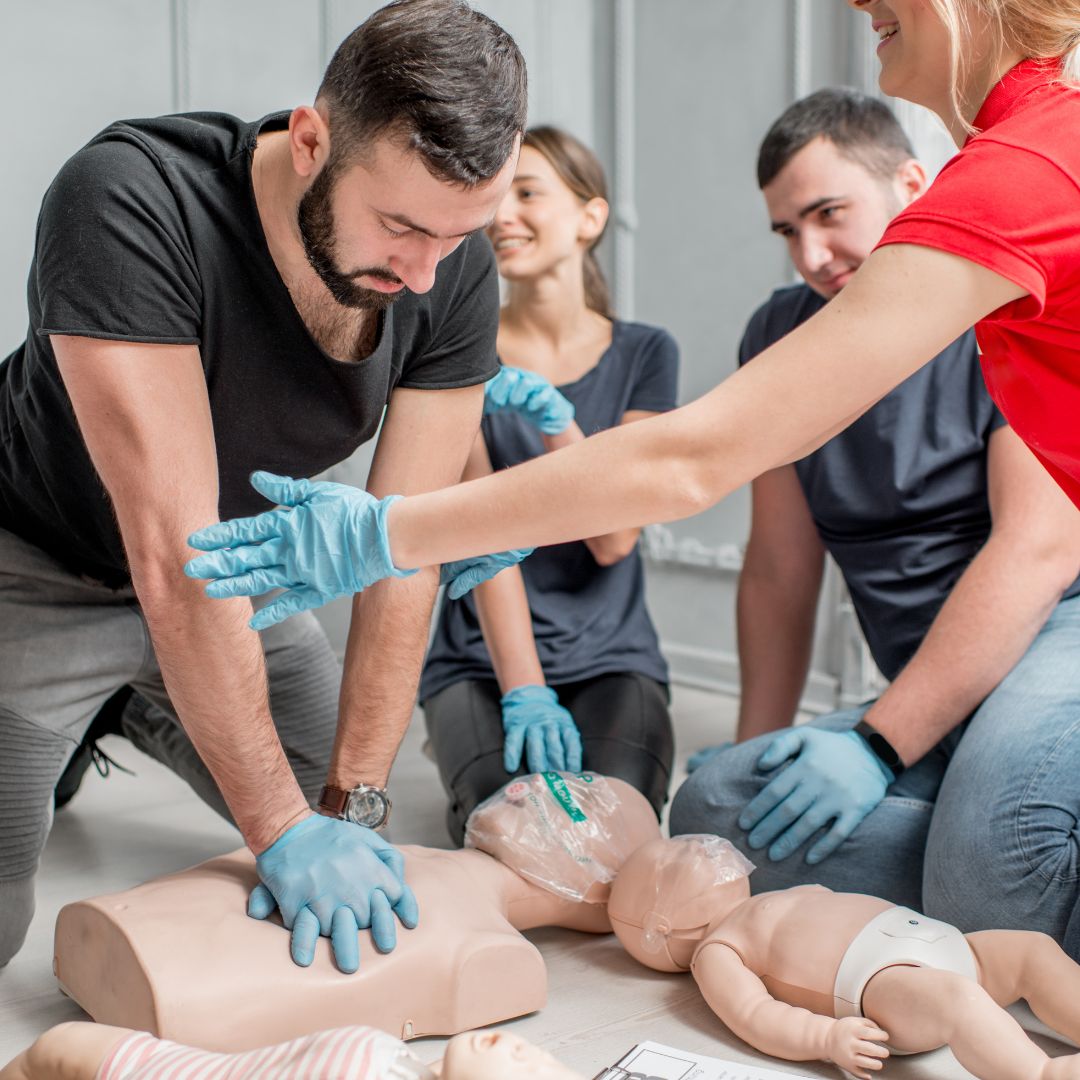
In-Pulse CPR provides hands-on American Heart Association CPR, AED, BLS, and First Aid training for individuals and workplaces.
View Upcoming CPR Classes
Businesses can also schedule private on-site CPR training for employees.
Learn About On-Site CPR Training
You do not need to think of yourself as a hero.
You just need to know what to do when someone needs help.
Updated September 2026: This article has been substantially revised to reflect current CPR guidance. The original “Alex” story is presented as an illustrative scenario rather than a documented cardiac-arrest case.
